
How to Test for Mold in an Apartment and What to Do If You Find It
If you live in an apartment, you know how quickly these environments can become humid and lack proper airflow. Mildew and mold spores are abundant in these conditions, and they tend to thrive in dark, moist places with limited airflow. This makes mold in an apartment a common issue, especially in buildings with shared walls, plumbing, or ventilation systems.
If left alone, these spores can grow into colonies of mold, which release their own volatile organic compounds as byproducts. These VOCs make mold so unhealthy for humans because they’re toxic when inhaled or ingested.
If you suspect that your apartment has mold growing somewhere on the premises (or within your home), it is crucial that you take action as soon as possible. If left untreated for too long, mold will expand to other parts of your property and make it uninhabitable. Here’s how to test for mold in an apartment and identify potential problems early.
Check for Visible Signs of Mold
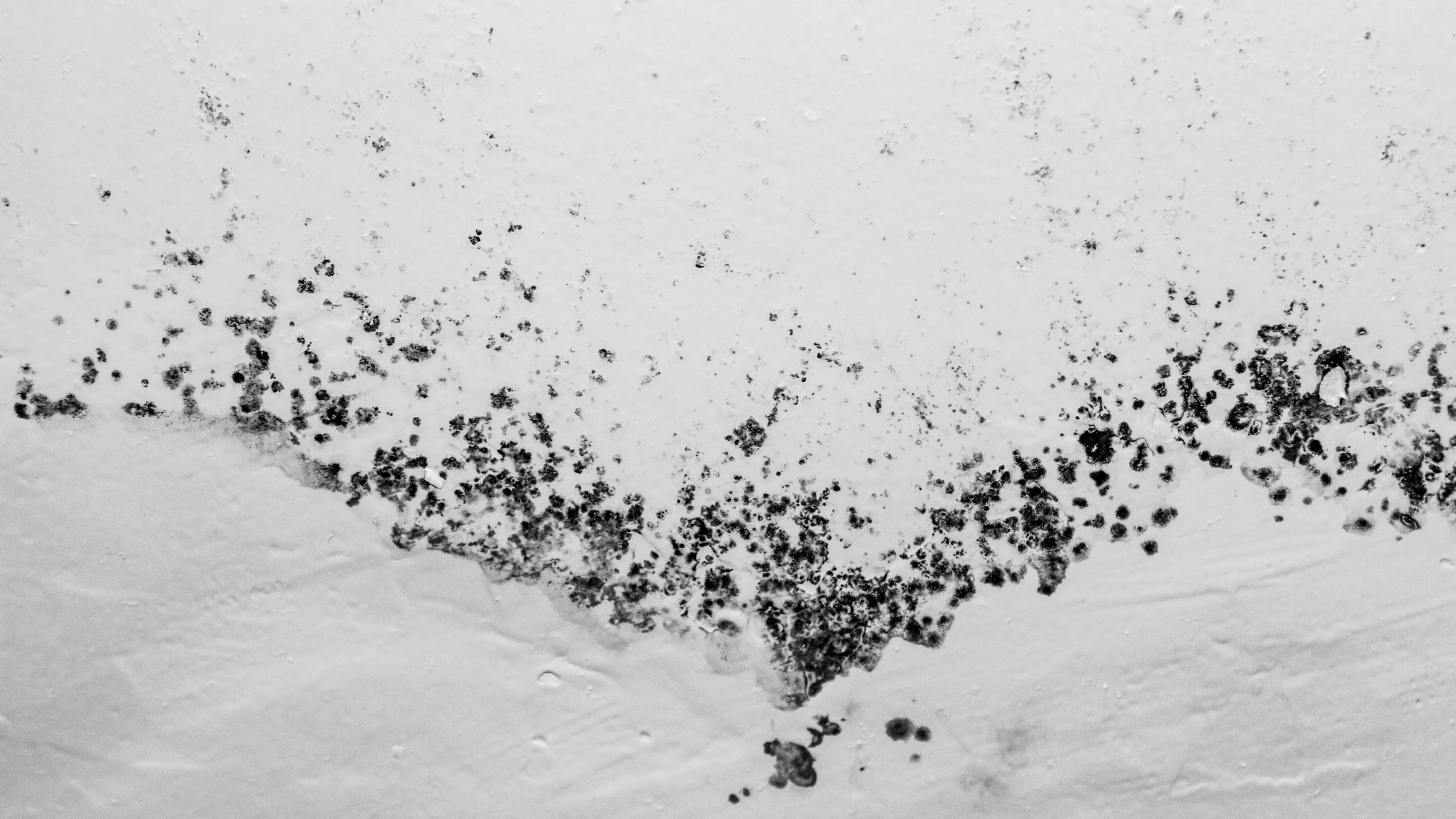
If you aren’t sure if there’s a problem, the first thing you should do is check for visible signs of mold. These are often characterized by black or gray spots that appear on the walls, floor, ceiling, or other porous surfaces.
If you notice these, you should definitely have your apartment tested for mold because it is present.
What you want to search for are the little pustules that appear on surfaces when mold is present. If you find spots of mold, it’s best to have your apartment tested for levels of mold spores. Otherwise, you run the risk of having the mold spores spread throughout your living space, which is a common concern when dealing with mold in an apartment.
Common Places To Check For Mold
There are several different places in your apartment where you can look for signs of mold. Keep in mind that these can be more obvious if you’re dealing with a massive mold outbreak, but they may also be evident if there’s just a small amount of mold growth.
Here are some common places to check for mold in an apartment:
Behind your refrigerator: The backside of your refrigerator is one of the most humid places in your apartment. If moisture is allowed to accumulate there, it can quickly foster the growth of mold.
Around your shower or tub: If you have a bathtub or shower in your apartment that isn’t properly sealed, water can seep behind the walls and collect. If this water sits there long enough, it can become a breeding ground for mold.
Behind light fixtures or air vents: Similar to behind your refrigerator, these areas can become damp and moldy if they’re not properly sealed.
Underneath your sink: As with behind the refrigerator and above your bathtub, under your sink can become humid and moldy if not properly ventilated.
Consider the Smell and Odor
Considering the smell and odor that surrounds your living space is another way to test for mold in your apartment. Mildew and mold produce distinctive smells that many people associate with the smell of stale or wet clothing.
If you smell something like this, it doesn’t necessarily mean you have mold, but it can be a sign that you need to clean up some areas of your home. If you smell a strong musty smell in your apartment, this might be a sign that there’s mold in your home.
The smell of mold spores is best described as a "musty" smell. This smell can be difficult to detect if you have a normal level of indoor airflow. If you smell this in your living environment, it’s a good idea to have your apartment tested for mold spores to confirm whether mold is present in your apartment.

Examine for Water Leaks
One of the easiest ways to test for mold in your apartment is to look for signs of water leaks. If you have a leaky roof or plumbing leak that isn’t being properly dealt with, mold will grow in these damp environments.
If you notice damp spots on the wall or ceiling that don’t dry up, there’s a good chance that you have a leak. You may also notice that your apartment is generally humid, even when it’s not humid outside. If you feel that the air inside your apartment is consistently moist, there’s a strong chance that you have a leak contributing to mold growth.
Check Your Overall Health
Another way that you can test for mold in your apartment is to look at your general health. If you’ve been experiencing any sort of respiratory issue or feel like you’re always coming down with a cold, mold could be the cause.
Mold spores are what cause most of the health issues that come from living in a moldy apartment. If you notice that your health has been declining steadily since moving into your apartment, there’s a good chance that mold is the cause.
You can also give your overall health a boost by cleaning up potential mold issues in your living environment.
Confirm Your Findings With A Mold Test Kit
If you want to be sure that you have mold in your apartment, you can buy a mold test kit for apartment use. These kits are easy to use and affordable, and they will provide you with plenty of information about the type of mold that is in your apartment.
They’re also useful for landlords and property managers, as they can help them determine the extent of the mold problem. A mold test kit will tell you how much mold is in your apartment, what species it is, and how much VOCs it emits. It will also let you know whether your apartment is clean enough to return to living in it or not.
While a mold test kit for an apartment can confirm the presence of mold, professional mold remediation may still be required if elevated levels are found or if mold has spread behind walls or into ventilation systems.
Contact ZeroMold To Verify and Remove Mold In Your Apartment
If you have used a mold test kit to confirm that you have mold in your apartment, you need to take action quickly. Mold grows quickly, and if you don’t have it removed, it can spread to other areas of your apartment and make it uninhabitable. In these cases, professional mold remediation is the safest and most effective solution.
It’s best to call ZeroMold, a professional mold removal company, to have it removed.
Family-owned and operated, ZeroMold provides a one-stop service for all of your mold removal and water damage cleanup needs. We have over 30 years of experience in the mold and water damage cleanup industry and use only the latest eco-friendly technology and techniques.
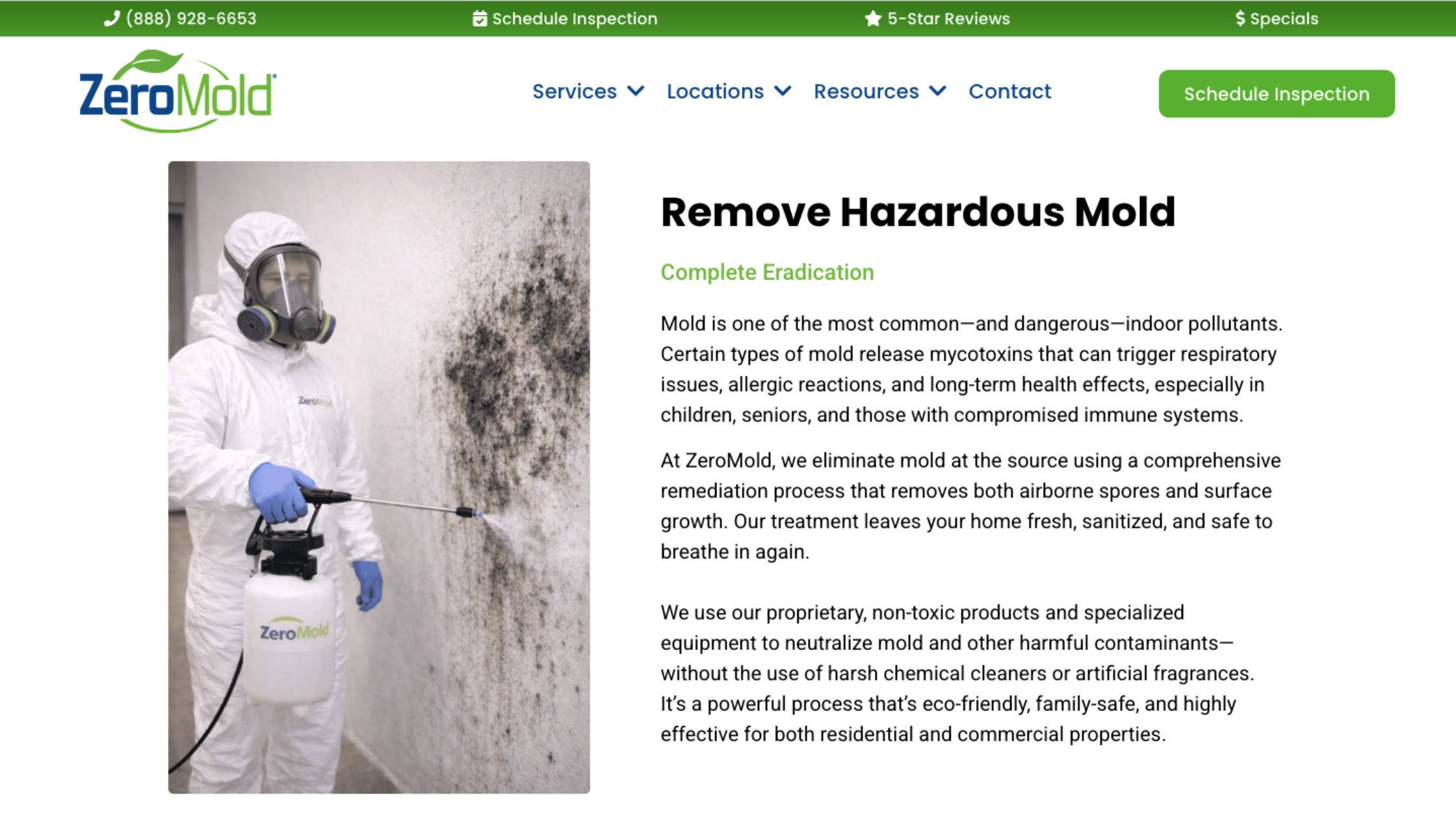
Being fully IICRC-certified with a 100% success rate, we take pride in providing our services in a friendly, reliable, and professional manner. We can come and test your living space as well as identify the type of mold that’s growing in your apartment. We’ll then clean up the infestation and make sure that it doesn’t return in the future.
Contact ZeroMold today for any mold disaster. Call us anytime at (888) 928-6653 for a free evaluation and inspection, or email us at [email protected] for your questions.
Conclusion
If you suspect that you have mold in your apartment, you need to take action as soon as possible. The best way to determine if you have mold is to pay attention to the smell and odor, look for visible signs of mold growth, and check your overall health.
Once you determine that you have mold in your apartment, you need to take action quickly. You should contact a professional mold removal company, such as ZeroMold, to have it removed.
Frequently Asked Questions About Mold in an Apartment
1. How do I know if there is mold in my apartment?
Common signs of mold in an apartment include visible black or gray spots, a persistent musty smell, ongoing humidity, unexplained respiratory symptoms, or signs of water damage. If you notice one or more of these issues, it’s a good idea to investigate further and test for mold.
2. How to test for mold in an apartment?
The best way to test for mold in an apartment is to start with a visual inspection and odor check, followed by a mold test kit if needed. These kits can help confirm the presence of mold spores. If mold levels are high or the source is hidden, professional testing may be required.
3. Are mold test kits for apartments accurate?
A mold test kit for apartment use can be helpful for confirming whether mold is present and identifying the type of mold. However, these kits may not detect hidden mold behind walls or under flooring. For more serious cases, professional mold remediation experts can perform more detailed testing.
4. Can mold in an apartment make you sick?
Yes, mold in an apartment can cause health issues, especially for people with allergies, asthma, or weakened immune systems. Common symptoms include coughing, congestion, headaches, skin irritation, and frequent respiratory infections.
5. Should I tell my landlord if I find mold in my apartment?
Yes, you should notify your landlord as soon as you suspect or confirm mold in your apartment. Mold is often caused by building-related issues such as leaks or poor ventilation, which are typically the landlord’s responsibility to address.
6. When is professional mold remediation necessary?
Professional mold remediation is recommended when mold covers a large area, keeps returning, or is caused by water damage that hasn’t been resolved. It is also necessary if mold is affecting indoor air quality or spreading to multiple areas of the apartment.
7. Can I remove mold in my apartment myself?
Small surface-level mold may be cleaned using appropriate safety precautions. However, attempting to remove mold without proper equipment can cause spores to spread. If mold is widespread or hidden, professional mold remediation is the safest option.