Does an Air Purifier Help With Mold or Just Improve Air Quality?
Mold is a type of fungus that can be found both outdoors and indoors. It can cause various health issues, including allergies, asthma, and other respiratory problems.
The most effective way to eliminate mold is to eliminate the source of moisture and humidity that fuel its growth.
But what if you can't do that? Many homeowners ask does an air purifier help with mold. The answer is that it can help reduce mold spores in the air, but it is not always a complete solution.
Air purifiers are designed to remove mold spores and other particles from the air, helping to reduce the amount of mold circulating in your home and promoting better air quality.
Besides helping with air purifier and mold concerns, air purifiers can also help reduce other air pollutants such as dust, pet dander, and smoke. With the right air purifier for mold, you can help improve the overall air quality inside your home.
That being said, air purifiers are not a one-stop solution for mold in your home. The best way to use them is after a professional mold remediation service to make sure mold does not return.
What Is An Air Purifier?
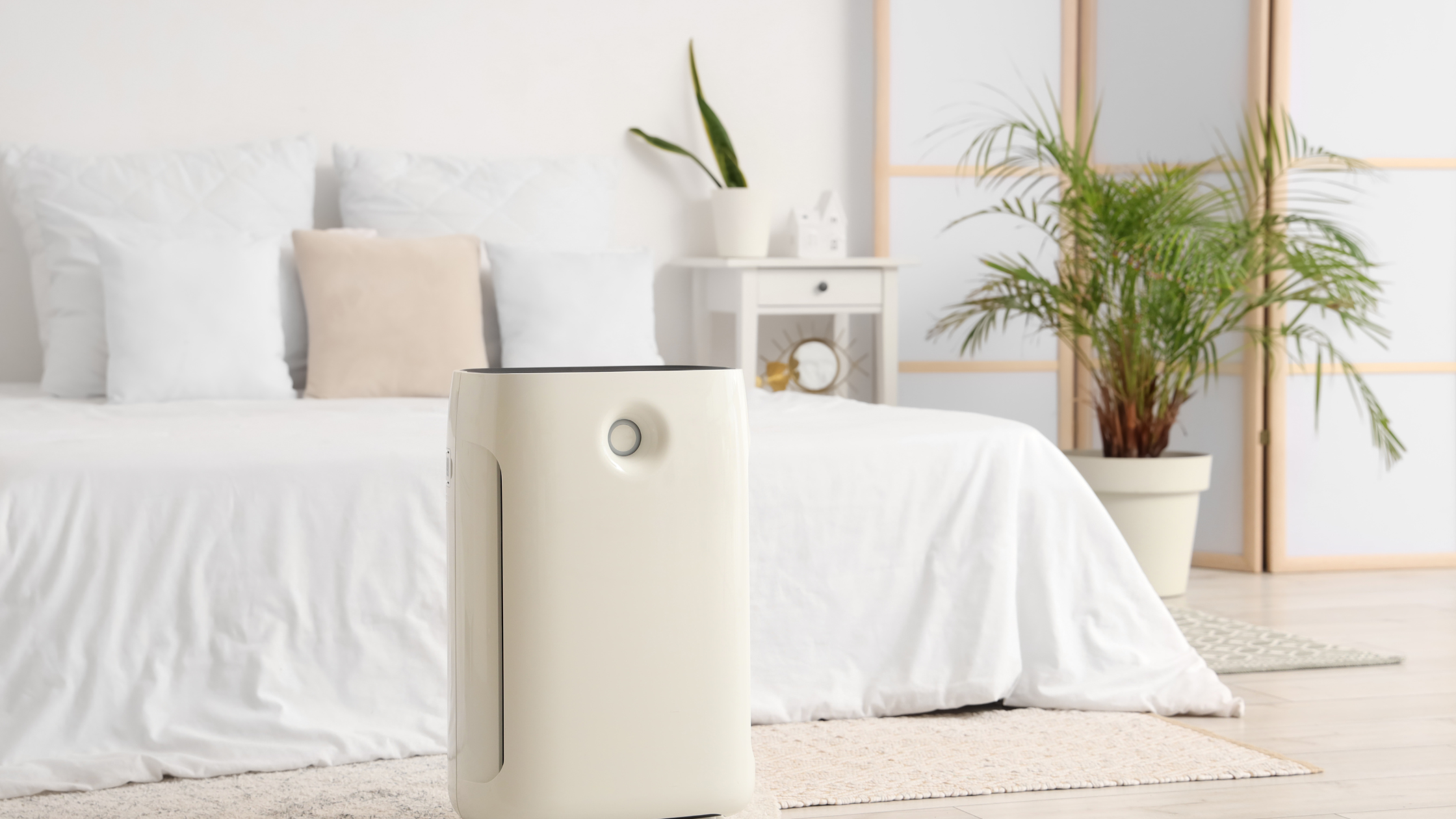
An air purifier is a device designed to remove pollutants from the air in your home. Air purifiers come in many different shapes and sizes and are designed to remove particles such as dust, pollen, pet dander, smoke, and mold spores.
This is why air purifier and mold control are often discussed together when people are trying to improve indoor air quality.
Air purifiers can also help reduce odors and VOCs (volatile organic compounds).
Does An Air Purifier Help With Mold?
Yes, in some cases does an air purifier help with mold is a reasonable question because air purifiers are designed to remove unwanted particles from the air, including mold spores.
Using an air purifier for mold can help reduce the number of airborne mold spores in your home, which may reduce allergic reactions and respiratory irritation.
While air purifiers can improve air quality, they do not remove mold growing on walls, ceilings, carpets, or other surfaces.
Because of this, air purifier and mold control should be viewed as part of a broader strategy to manage indoor mold problems.
What Are the Benefits of Using an Air Purifier?
Using an air purifier in your home can offer several benefits. An air purifier for mold can help reduce the number of mold spores circulating in the air, along with other air pollutants such as dust, pet dander, and smoke.
This can help reduce the risk of allergic reactions, asthma, and other respiratory problems. Many homeowners dealing with air purifier and mold concerns use them to improve overall indoor air quality.
How to Buy the Right Air Purifier for Mold Removal
When buying an air purifier, it is essential to choose one that is specifically designed to remove mold spores from the air.
Look for an air purifier for mold that includes a HEPA filter, as this type of filter is designed to capture particles as small as 0.3 microns.
It is also essential to look for an air purifier with a high Clean Air Delivery Rate (CADR) rating, as this indicates how quickly the air purifier can filter the air in your home.
Mold is a common problem in homes and buildings, causing various health issues and compromising the structural integrity of affected areas. Because of this, air purifier and mold prevention are often discussed together when improving indoor air quality.
It's no surprise that people are seeking ways to deal with this problem. One such method is using air purifiers. But does an air purifier help with mold completely?
While air purifiers can reduce airborne mold spores, they do not remove mold that is already growing on surfaces. To fully address mold problems, the moisture source must still be identified and resolved.
Understanding Mold and Its Effects
What is Mold?
Mold is a type of fungus that thrives in damp, dark, and humid environments. It reproduces through spores that can travel through the air, which can cause various health issues when inhaled.
Health Risks Associated With Mold
Allergic reactions
Asthma attacks
Respiratory infections
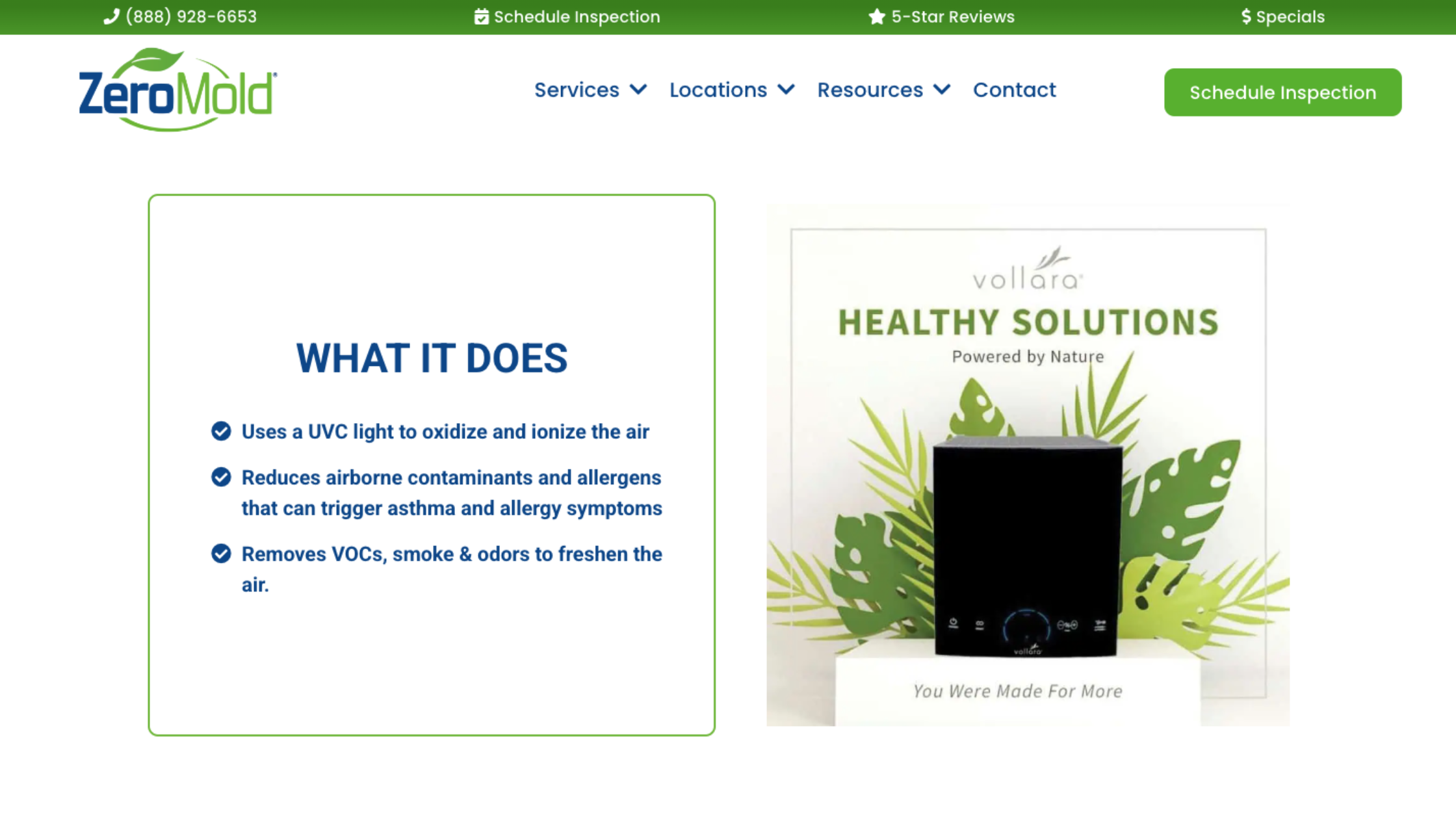
Irritation of the eyes, nose, and throat
How Air Purifiers Can Help With Mold
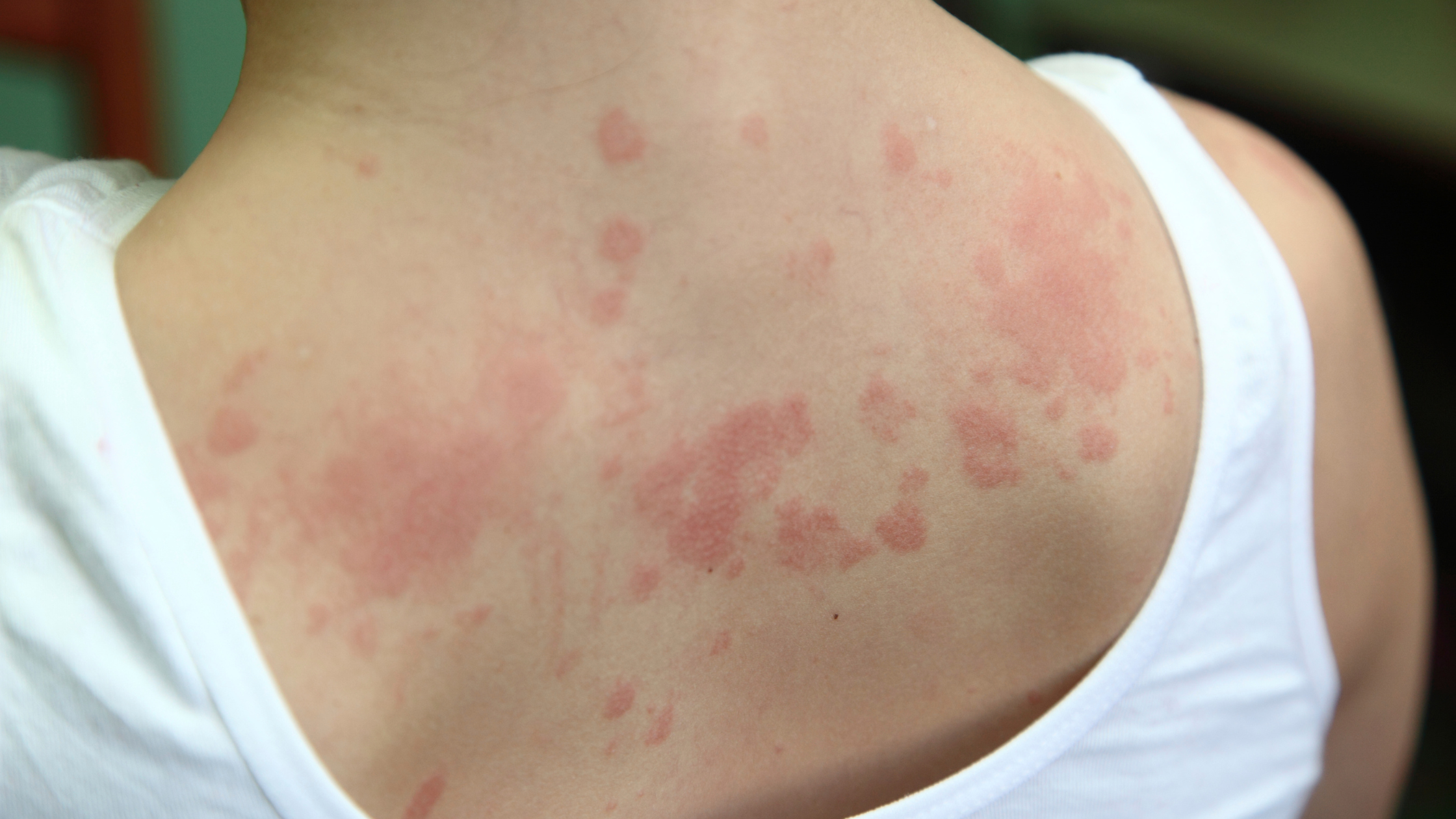
Air purifiers can help improve indoor air quality by removing particles that are floating in the air, including mold spores. Different types of air purifiers use different filtration methods, which is why some are more effective than others when it comes to air purifier and mold concerns.
Understanding the types of air purifiers available can help you choose the right air purifier for mold in your home.
Types of Air Purifiers
HEPA Filters
High-Efficiency Particulate Air (HEPA) filters are effective in trapping mold spores and other airborne pollutants. Because of this, a HEPA-based air purifier for mold is often recommended when trying to reduce airborne mold particles.
They are capable of capturing particles as small as 0.3 microns in size.
Activated Carbon Filters
Activated carbon filters are designed to remove odors and gases, including some of the volatile organic compounds (VOCs) that mold releases. However, they are not as effective at capturing mold spores.
Ultraviolet Germicidal Irradiation (UVGI)
UVGI technology uses UV-C light to destroy mold spores and other microorganisms. While this technology can help in some situations, it may not capture larger airborne particles.
Effectiveness of Air Purifiers in Removing Mold
Air purifiers can help improve indoor air quality by removing mold spores and other airborne particles. However, it is important to understand what they can and cannot do when it comes to mold problems in the home.
Removal of Mold Spores
Air purifiers with HEPA filters can capture mold spores floating in the air. This reduces the number of airborne spores and can help improve indoor air quality.
Because of this, many people researching does an air purifier help with mold discover that air purifiers are useful for reducing airborne contamination.
Elimination of Mold Odors
Activated carbon filters can help remove mold-related odors, making indoor environments more comfortable.
Prevention of Mold Growth
While air purifiers can reduce airborne mold spores, they do not stop mold from growing on walls, ceilings, or other surfaces. Addressing moisture problems is still necessary to prevent mold growth.
Conclusion
Mold can cause various health issues, including allergies, asthma, and other respiratory problems.
The most effective way to eliminate mold is to eliminate the source of moisture and humidity that fuel its growth.
Many homeowners ask does an air purifier help with mold, and while air purifiers can reduce airborne mold spores, they do not remove mold growing on surfaces.
Air purifiers are designed to remove mold spores and other particles from the air, helping improve indoor air quality. Using the right air purifier for mold can help reduce airborne contaminants such as dust, pet dander, smoke, and mold spores.
However, air purifiers work best as part of a broader strategy that includes addressing moisture issues and removing mold from affected areas.
Get Your Home Mold-Free Now!
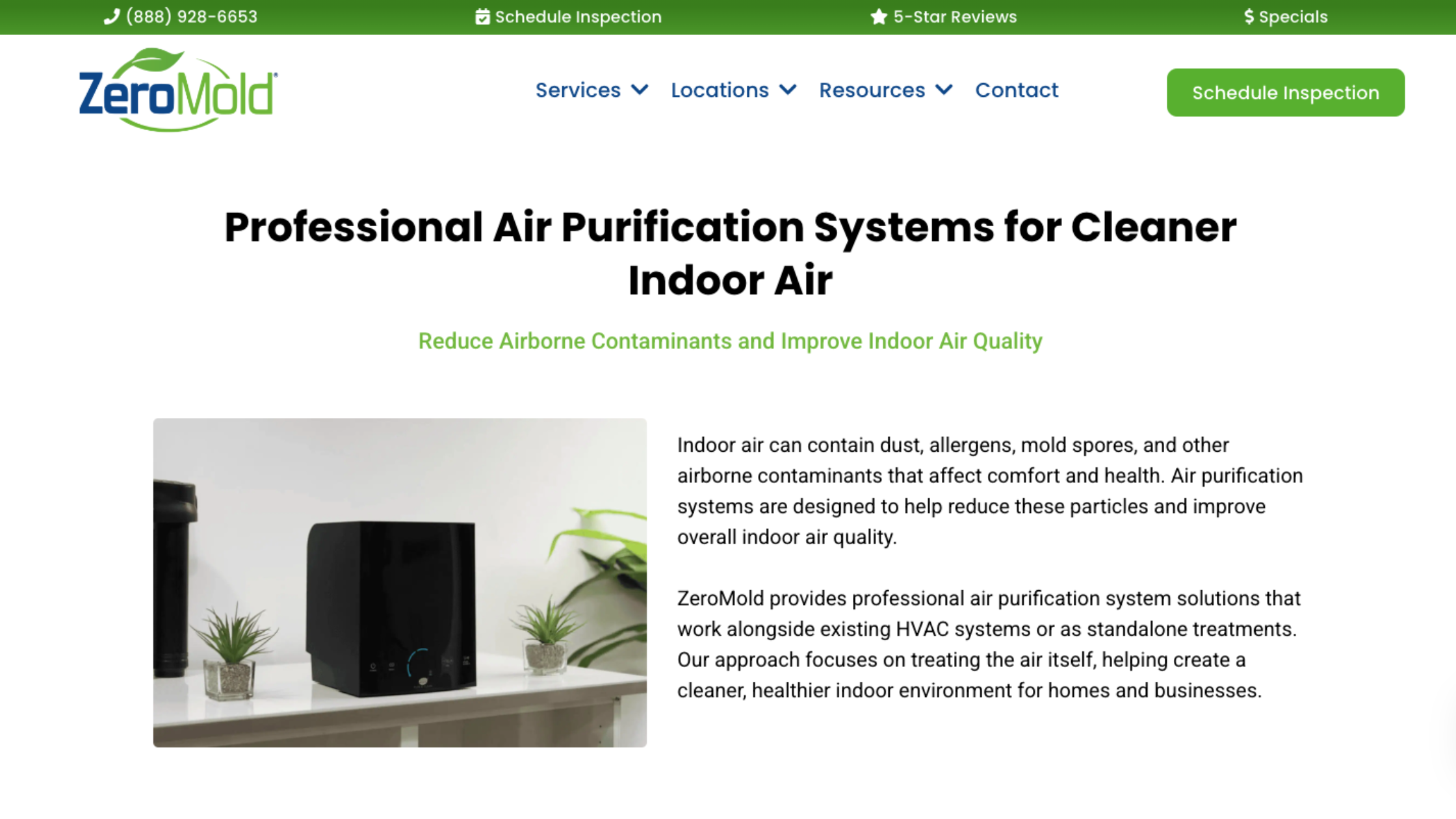
If you want to get your home mold-free now, look no further than ZeroMold's professional mold removal.
We are your go-to experts in providing reliable, cost-effective, and efficient solutions to mold and mildew problems.
Our experienced team of mold removal specialists uses the latest technologies, tools, and techniques to identify, inspect, and remediate mold in your home.
We also provide guidance to help prevent mold growth in the future. With ZeroMold, you can feel confident that your home will be safer and healthier.
Trust ZeroMold to help get your home mold-free.
Frequently Asked Questions About Air Purifiers and Mold
1. Does an air purifier help with mold in your home?
Yes, in some situations does an air purifier help with mold is a reasonable question. Air purifiers can remove mold spores that are floating in the air, which can improve indoor air quality. However, they do not remove mold that is already growing on walls, ceilings, or other surfaces.
2. Will a dehumidifier kill mold in the air?
Many homeowners ask will a dehumidifier kill mold, but the answer is no. Dehumidifiers and air purifiers can help reduce the conditions that allow mold to grow, but they do not actually remove mold colonies from surfaces.
3. What type of air purifier is best for mold?
The best air purifier for mold is one that uses a HEPA filter. HEPA filters are designed to capture very small particles, including mold spores, which helps reduce the number of spores circulating in the air.
4. Can an air purifier prevent mold from growing?
Air purifiers can help reduce airborne mold spores, but they cannot stop mold from growing on surfaces. Preventing mold usually requires controlling moisture levels and fixing any leaks or humidity problems in the home.
5. When should you call a professional for mold?
If mold is already visible or spreading in your home, an air purifier alone will not solve the problem. In these cases, a professional mold remediation company may be needed to remove the mold safely and prevent it from returning.